

 Málaga & the AxarquíaNerja: the Balcón de Europa and the town around itThe Balcón de Europa, the Cueva de Nerja, Burriana and the Chíllar gorge, and how Nerja compares with Almuñécar.
Frigiliana: the white village above Nerja
Frigiliana is a Moorish hill village about six kilometres above Nerja, with tiled history, cane honey and a festival of three cultures.
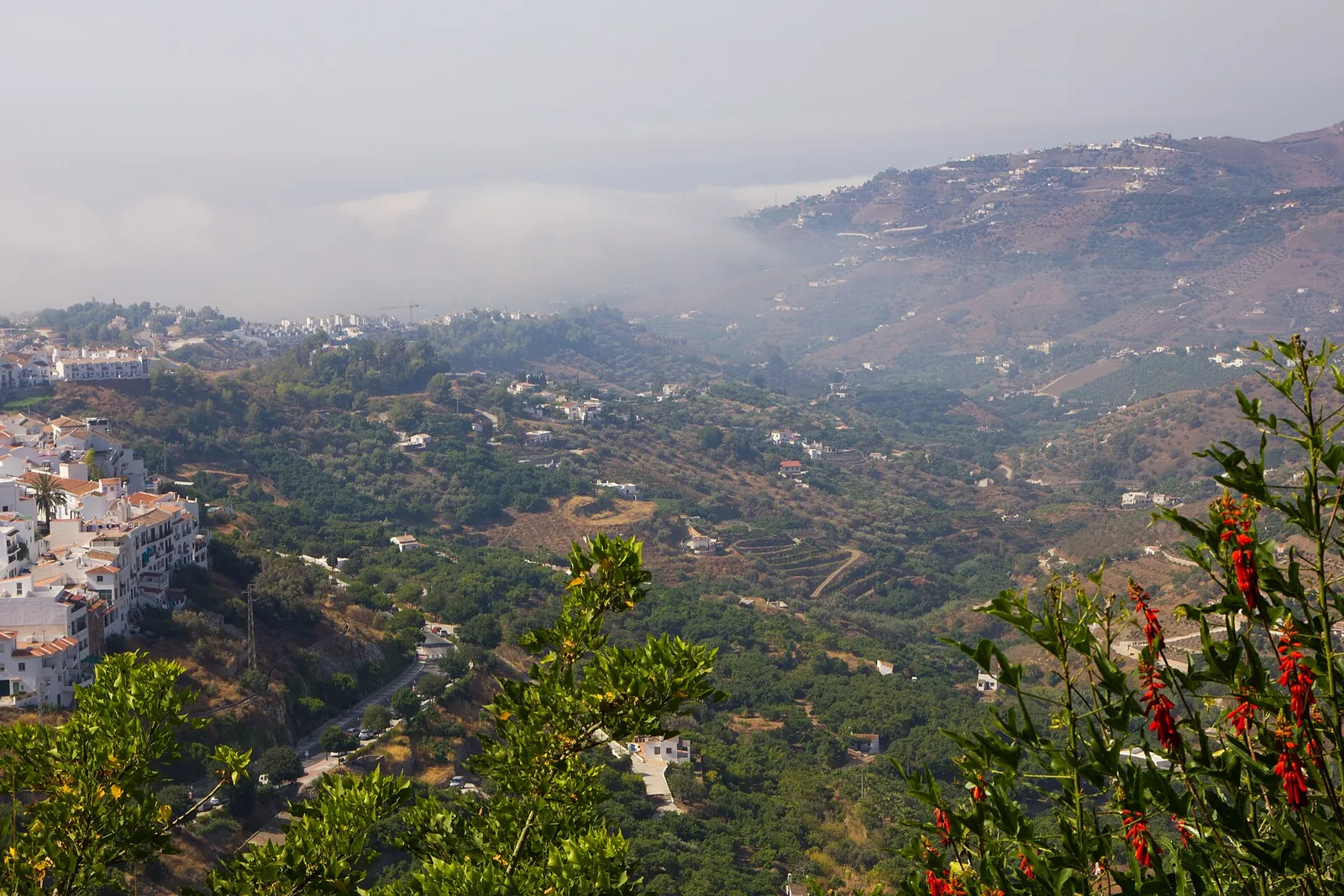
Frigiliana sits about six kilometres north of Nerja, at roughly 320 metres, and the difference shows within the first ten minutes of driving. The air is a little cooler, the sea drops away below you, and the lanes that climb through the old town were laid out long before anyone owned a car. It is the village we send people to when they say they want Andalucía without giving up the beach.
Up through Barribarto
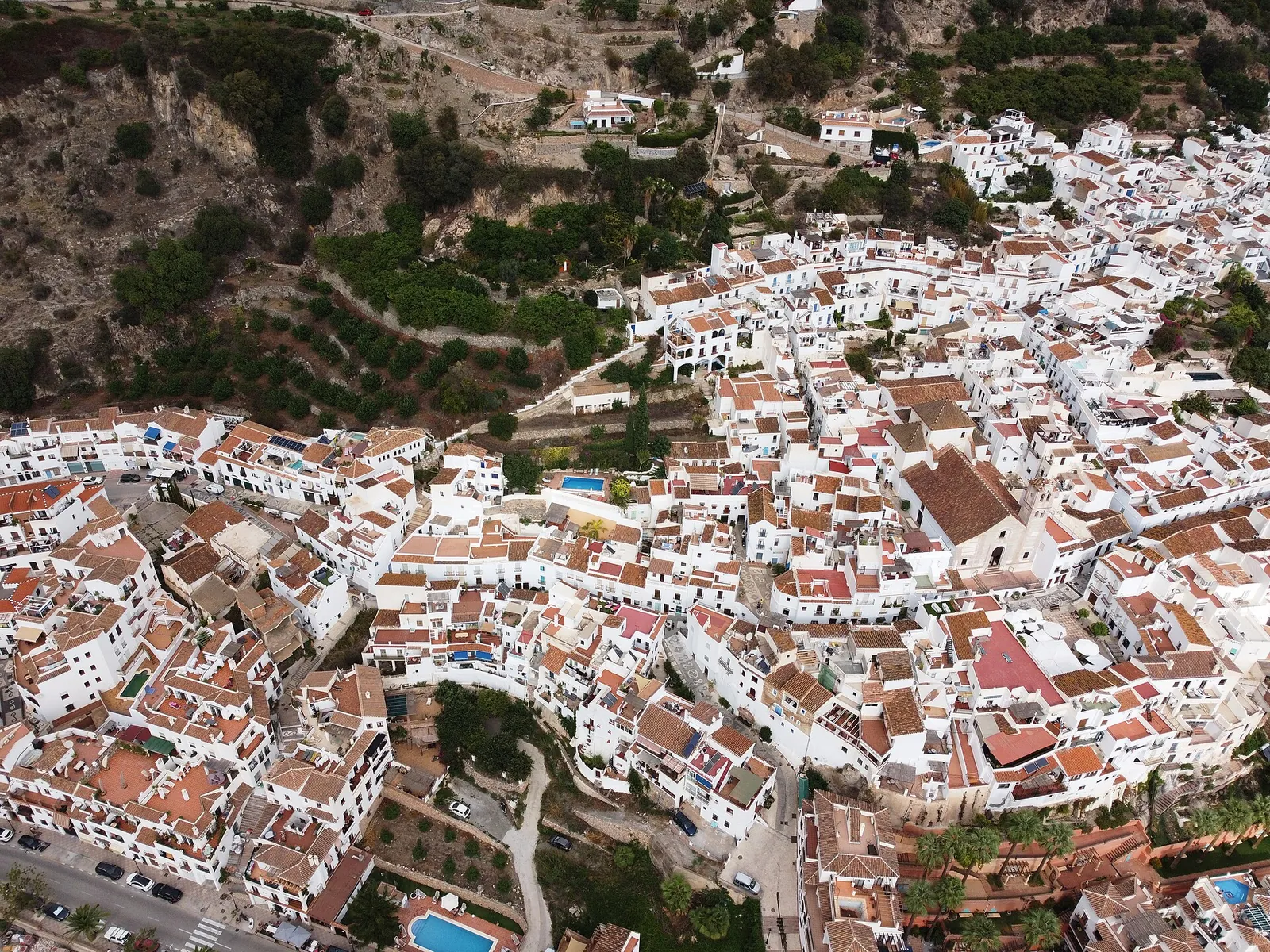
Leave the car at the edge of the village and walk in, because the old quarter does not reward driving. Barribarto is the Moorish quarter, where people lived both before and after the Reconquista, and you reach it by climbing from the centre through lanes that bend, stop and start again. The walls are whitewashed, the cobbles are uneven, and every few steps a gap between two houses stops you with a view down to the coast. Go early if you want photographs without other people in them. Go in the last hour of daylight if you want the light on the walls.
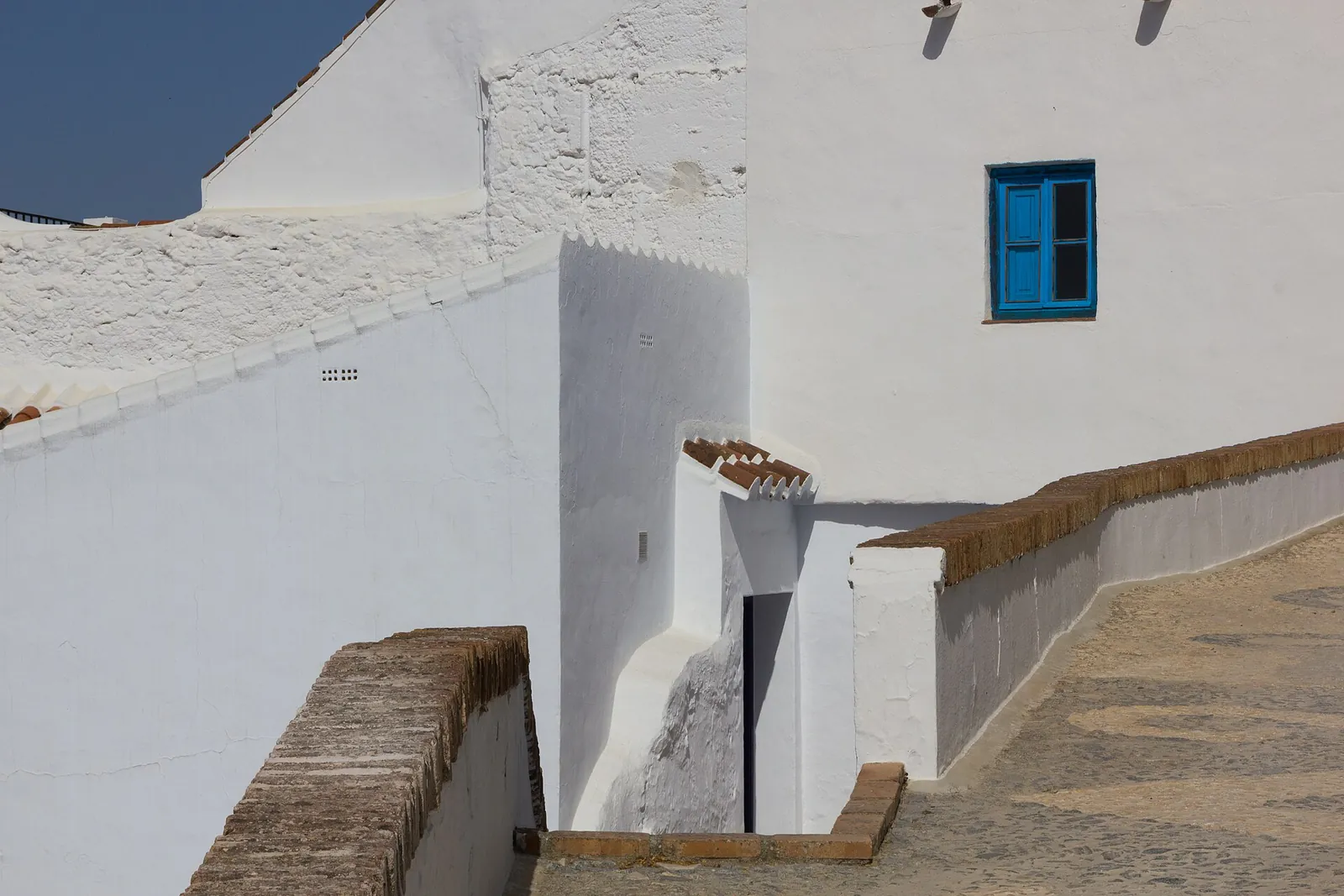
Some of the best-looking houses sit at the top of flights of steps, which is lovely until you are carrying the shopping. Little of the Arab castle is left, only its foundations and part of the access ramp, but the rest of the old quarter still follows the lines of its early streets.
Twelve tiles and a hard history
The village does not tell its history quietly. Along Calle Real, the main street, a dozen ceramic panels set out the story of the Morisco uprising of 1568 to 1570. Read them in order and you move from the revolt to the surrender of the rebels who had fled to Frigiliana from the Alpujarras and Vélez, then to the expulsion of the Moriscos to Extremadura and Zamora. The castle was destroyed in 1569, and the village was resettled with Old Christians from Granada and Valencia. It is a hard story told in bright tiles, and it is better for being told plainly.
The festival of the three cultures
The event that gives the village its reputation is the Festival of the Three Cultures, which celebrates the Christian, Muslim and Jewish strands of the town's past. It runs for four days over the last weekend of August, and the 2026 dates are 27 to 30 August, organised by the town hall. The best-known part is the tapas route, with bars and restaurants serving small plates inspired by each of the three kitchens, alongside concerts, a market and talks. The 2025 edition drew more than 20,000 visitors, which is almost six times the number of people who live here.
Cane honey from the old sugar mill
Ask for miel de caña in the shops and you will be handed a thick, dark syrup, not bee honey. It is cane juice boiled down until it is sweet and concentrated, and the village has been making it for a long time. The place to see it is the Ingenio, the old sugar mill, housed in a Renaissance building known as the Palace of the Counts, built partly with materials from the Arab castle. It is often described as the only sugar cane honey factory still working in Europe, and the façade is worth a look from the street even when the doors are closed.
Inside visits are limited, so check with the tourist office before you plan a day around one. A jar makes a good thing to take home, and it is lovely warmed a little and spooned over plain yoghurt.
Walking into the Almijara
The walking is the reason many buyers end up staying. The natural park of the Sierras de Tejeda, Almijara y Alhama was declared in 1999, covers about 40,660 hectares across Málaga and Granada, and the Almijara range is the wild country you walk into from the village. The paths begin within a short walk of the last houses. Go out early, carry more water than you think you need, and wear proper shoes on the stony tracks. The reward is the view back down to the coast, with the sea close enough to make you check the forecast for a swim.
Living there, and what to check before you buy
Frigiliana has about 3,400 residents, and it is ten minutes above the sea in the sense that matters. The drive down to Nerja takes about ten minutes on a good day, and the shops, the beaches and the rest of daily life are all down there. Buyers often ask us how often they will drive down to the coast. The answer is usually more often than they planned, and the drive becomes part of the charm.
In Frigiliana you buy the walk as well as the house.
If you are comparing the two, our Nerja guide covers the coast end of the same drive, and why we think the Costa Tropical suits buyers explains the wider picture. Run a first number through the mortgage calculator, then use the house hunter to see what the market is offering.
Homes for saleSee homes for sale in NerjaSources
- Wikipedia — Frigiliana, accessed November 2026
- Wikimedia Commons — Walls in Frigiliana, 29.07.2015.jpg, CC BY-SA 3.0, accessed November 2026
- Wikimedia Commons — View from Frigiliana towards the Coast, 29.07.2015.jpg, CC BY-SA 3.0, accessed November 2026
- Festivales de España — Festival Frigiliana 3 Culturas 2025, accessed November 2026
- Junta de Andalucía — declaración del Parque Natural Sierras de Tejeda, Almijara y Alhama, accessed November 2026
Keep reading
All storiesMálaga & the AxarquíaNerja: the Balcón de Europa and the town around itThe Balcón de Europa, the Cueva de Nerja, Burriana and the Chíllar gorge, and how Nerja compares with Almuñécar. Málaga & the AxarquíaTorrox: the climate claim, the promenade and the village aboveTorrox's best-climate claim, what the MeteoGroup study compared, and the seafront, Roman ruins and village above the coast.
 Buying a homeRenting out your home: the holiday-let licence in AndalusiaHoliday lets in Andalusia need a regional registration, a planning check and, in some buildings, a community vote. Here is the order to do things in.
Ready when you are
Find your place on the Costa Tropical
Browse every home we have for sale, or tell House Hunter what you want and we will look for you.