
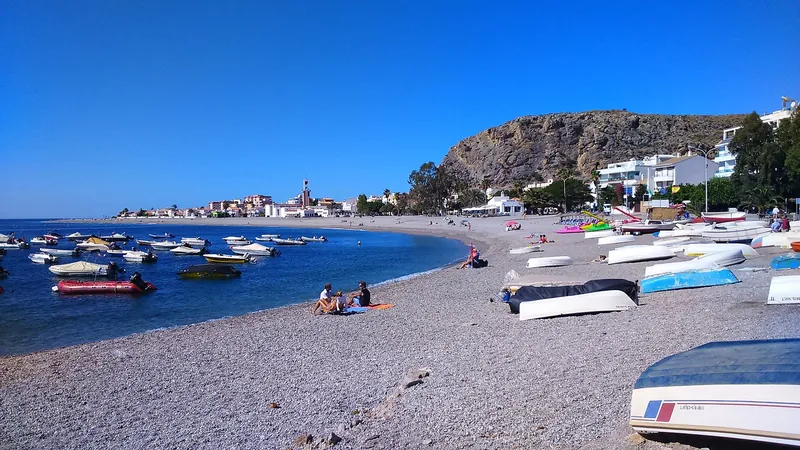
 Costa Tropicalثلاثة عشر شاطئًا من الغرب إلى الشرق، من Cantarriján إلى CalahondaThirteen beaches from Cantarriján to Calahonda: what each is like underfoot, who it suits, how to get there and the 2026 Blue Flags.
Almuñécar أبعد من الشاطئ
Beyond the beach: Almuñécar's Roman fish factory, aqueduct, San Miguel castle and El Majuelo park, plus La Herradura next door.
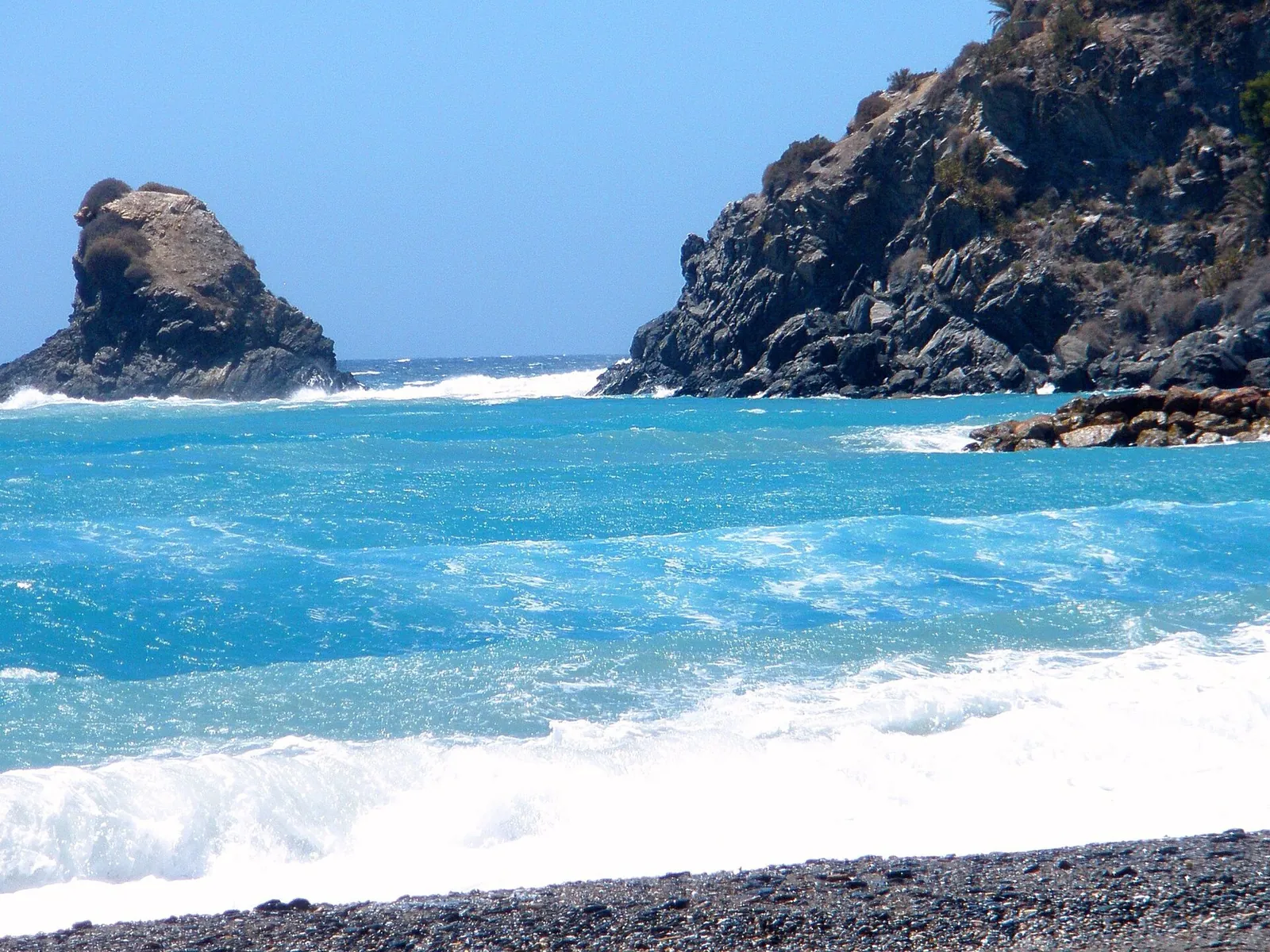
Almuñécar is a beach town where people live all year, with a castle, a Roman aqueduct and a quieter village, La Herradura, a few minutes away. Most buyers come for the beach. Spend a morning in the old town as well before you decide.
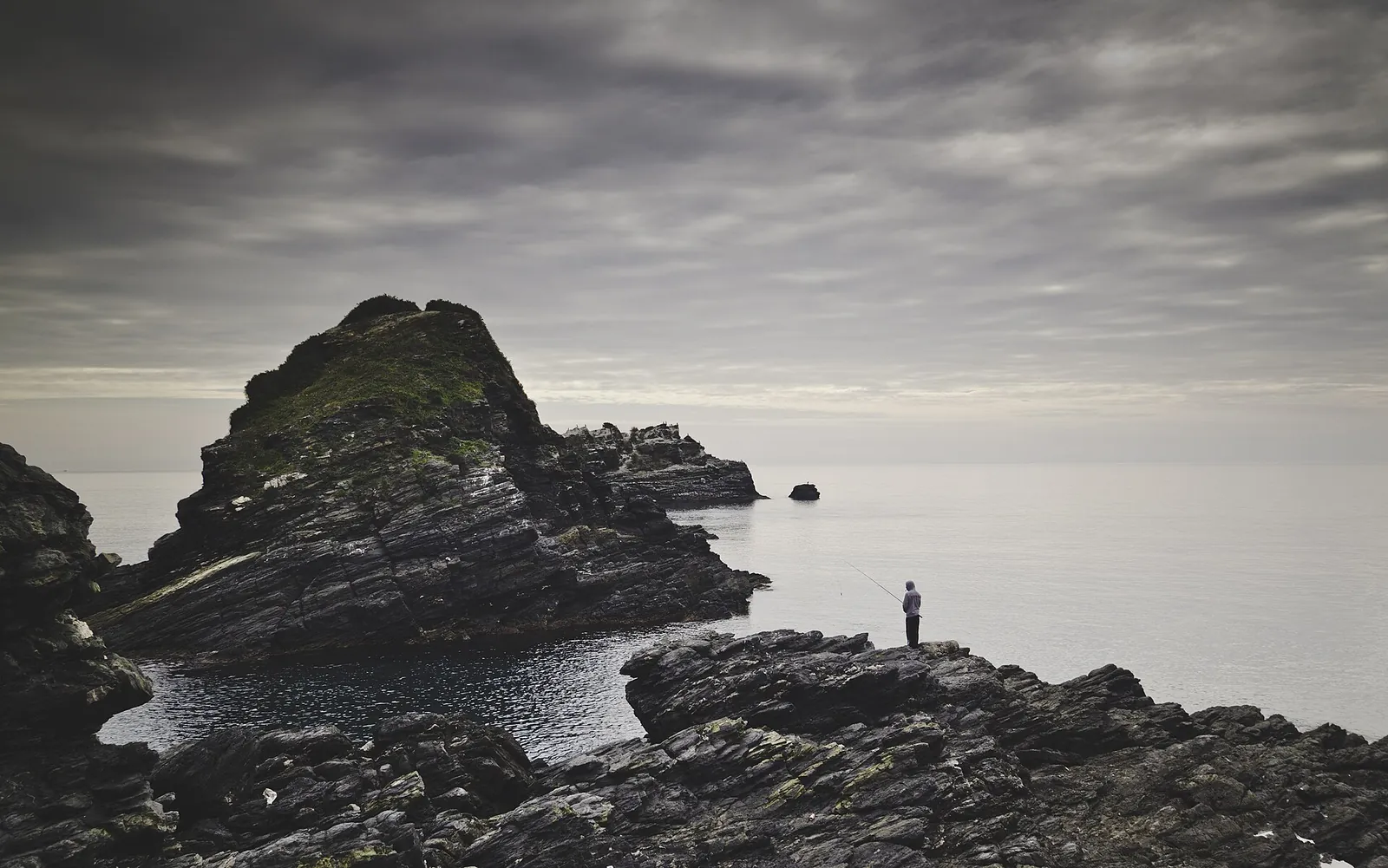
Sexi, the port that salted fish for Rome
Almuñécar has been a port for nearly 3,000 years. Phoenician traders founded it around 800 BC and called it Sexi. Under the Romans it made salted fish and garum, a fish sauce, for the whole empire. You can still see much of that past in the town centre.
El Majuelo, where the factory sits in a park
The easiest place to start is Parque Botánico El Majuelo, a park on Avenida Europa opposite the main tourist office, just below the castle. Inside it are the remains of the old fish-salting factory, first built by the Phoenicians and later enlarged by the Romans.
The park is also a botanical garden, with more than 200 kinds of tropical plants and many palms. Small buildings along the paths hold craft workshops and souvenir shops. In summer it is one of the shadiest places in town.
Up to the castle, then down to the rock
The Castle of San Miguel stands above the old town. It is small but in good condition, and its little museum has a model of the area that helps you see which beach is which.
Go up in the last hour of daylight, when the old town turns gold below you. The lanes are steep and the walk is longer than it looks on the map. At the end of September the town holds the Fiestas de San Miguel for three days, and the streets around the castle are very busy then.
On the way down you pass the Peñón del Santo, the large rock with a cross on top that you can see from the beach. Climb it for a view of the whole town and coast.
The aqueduct that runs through town
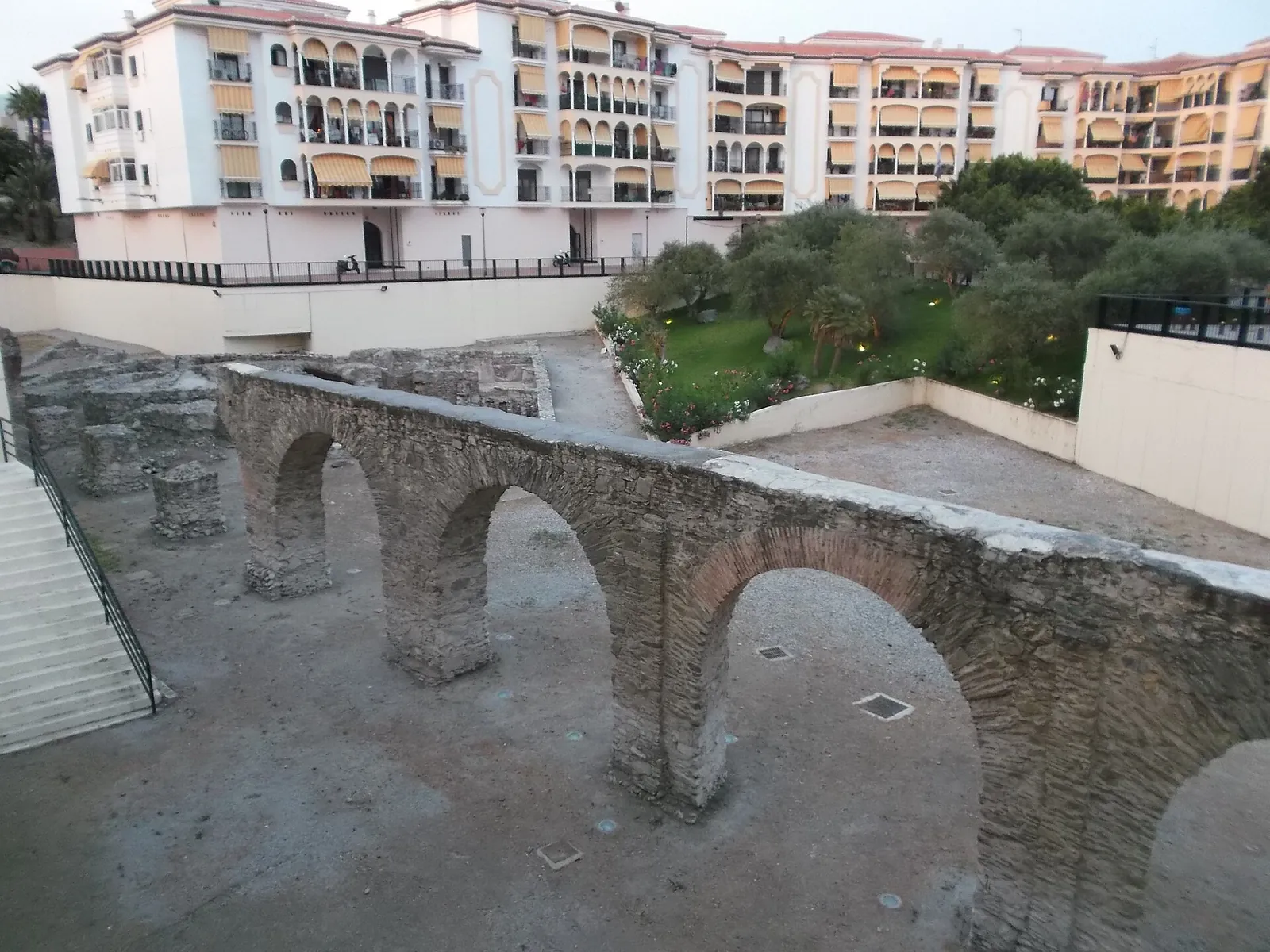
The Roman aqueduct is about 2,000 years old, from the first century AD. It starts at Torrecuevas, four kilometres north of the town, and parts of it still stand inside Almuñécar. They are easy to walk past without noticing.
Almuñécar has been a port for more than two thousand years, and it still makes you walk through its history on the way to the beach.
Most people take a photo and move on. Stop for a few minutes and look at how the stones were laid.
Living here the rest of the year
Almuñécar had 27,544 residents on 1 January 2025, and most of them live here all year, so the town stays open after the summer. Winters are mild compared with northern Europe, but January evenings are cool enough for a jumper.
For more on the coast, read our guides to the beaches, airports and getting here and the weather.
La Herradura, the quieter sister
La Herradura is a village a short drive west, part of the same municipality but with its own bay. It is quieter than Almuñécar, with a village feel and a very good beach.
Almuñécar has the castle, the shops and the Roman remains. La Herradura is for a coffee by the water with nothing else to do. Many residents spend time in both, and that is how we suggest you see them.
منازل للبيعSee homes for sale in Almuñécarالمصادر
- Wikipedia — Almuñécar, accessed November 2026
- almunecarinfo — Historical & Cultural Almuñécar, accessed November 2026
- almunecarinfo — El Majuelo Park and Botanical Garden, accessed November 2026
- Wikimedia Commons — Castillo de San Miguel, Almuñ 24J 06 (CC BY-SA 4.0), accessed November 2026
- Wikimedia Commons — Acueducto de Almuñécar01 (CC BY-SA 4.0), accessed November 2026
تابع القراءة
جميع المقالاتCosta Tropicalثلاثة عشر شاطئًا من الغرب إلى الشرق، من Cantarriján إلى CalahondaThirteen beaches from Cantarriján to Calahonda: what each is like underfoot, who it suits, how to get there and the 2026 Blue Flags.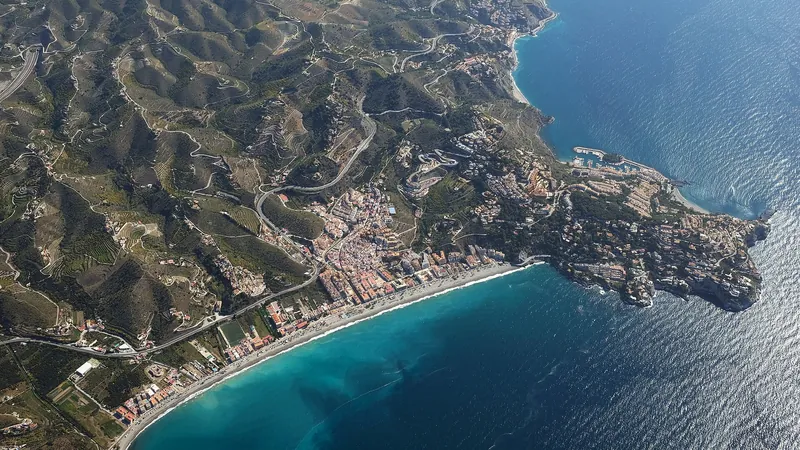 Costa Tropicalتحت سطح الماء: الغوص والغطس السطحي من La HerraduraDiving and snorkelling off La Herradura: the Maro-Cerro Gordo cliffs park, Punta de la Mona, what lives below and when the water is warmest.
 Costa Tropicalمالقة أم غرناطة أم ألمرية؟ السفر جوًا إلى Costa TropicalMálaga, Granada or Almería: drive times to Almuñécar and Motril, who flies where from northern Europe, and the bus, train and ferry options.
جاهزون متى كنت جاهزًا
اعثر على مكانك في Costa Tropical
تصفّح كل المنازل المعروضة لدينا للبيع، أو أخبر House Hunter بما تريد وسنبحث لك.