

 GranadaThe Lecrín Valley: orange blossom halfway to GranadaHalfway between the Costa Tropical and Granada, the Lecrín Valley has orange groves, white villages and a cable railway most people have forgotten.
The Alpujarras: white villages on the Sierra Nevada’s south face
The white villages of the Alpujarras: Lanjarón, the Poqueira gorge, Trevélez, the drive from Motril and a weekend plan.
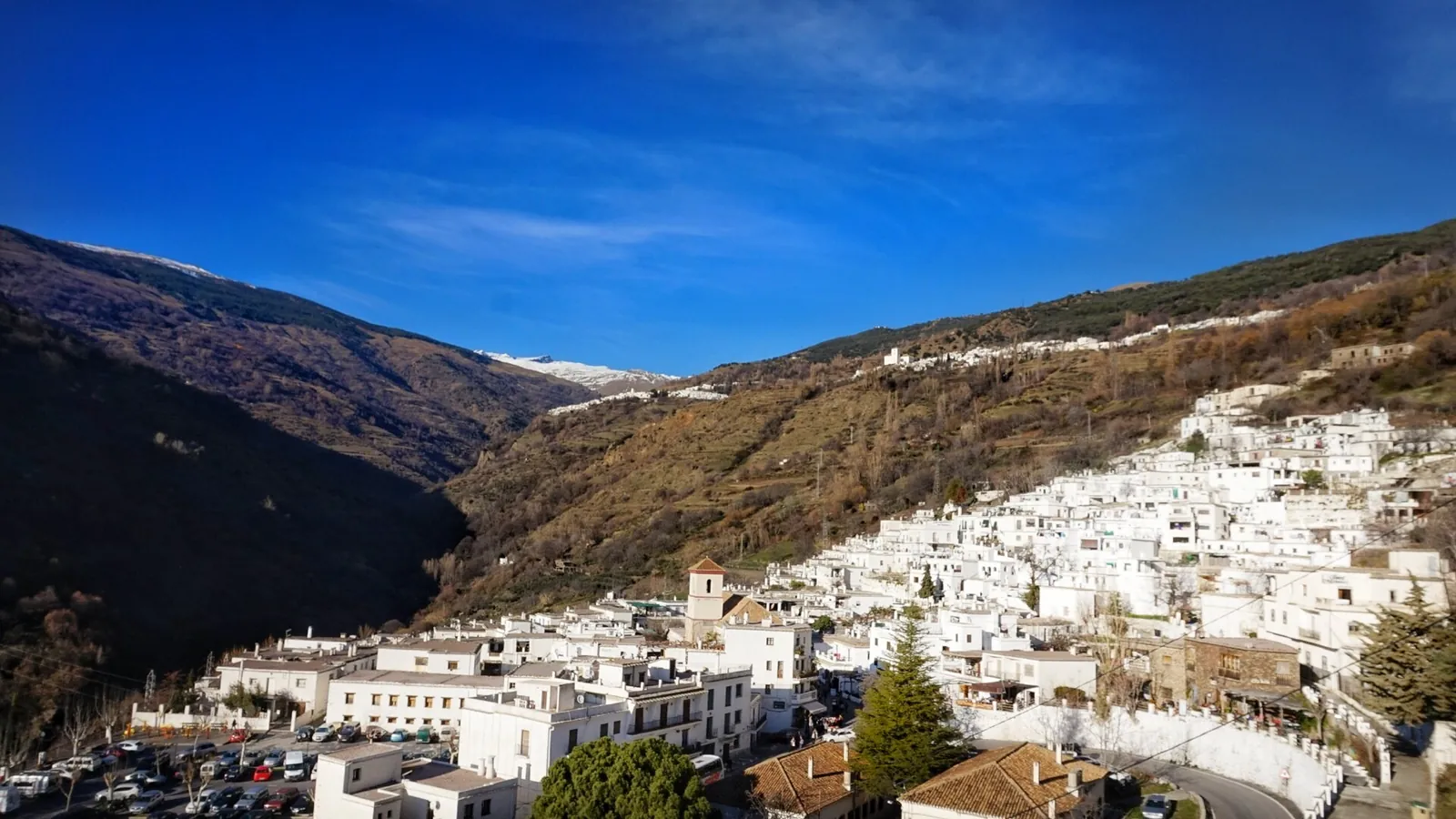
Drive up from the coast and the change comes gradually, then all at once. The Guadalfeo valley gives way to hillside, the road starts to bend, and a white village appears on the slope as if someone had tried to fit a whole town onto one shelf. These are the Alpujarras, the southern face of the Sierra Nevada, and for a day or a weekend they are a good reason to leave the sea behind.
Where the Alpujarra begins
The Alpujarra is a region on the southern slopes of the Sierra Nevada, and most people mean the Granada side of it, with Órgiva as its administrative centre. The average height is about 1,200 metres, so expect it to feel cooler than the coast the moment you leave the valley. Olives grow on the lower slopes and almonds on the southern hills higher up. Water is the real story. Water from mountain springs is channelled down through the old irrigation canals, the acequias, to terraces and villages that would otherwise be dry.
Lanjarón, the spa town at the gate
Lanjarón is the first town most people reach, a spa town at about 660 metres with a ruined castle and chalybeate baths, the iron-bearing mineral waters that give the place its reputation. The town is pleasant to stroll through in the late morning, before the tour coaches arrive, and the climb up toward the castle ruin is short enough to do before lunch.
Órgiva, a few kilometres further up the valley, is the practical stop. It is the administrative centre of the Granada Alpujarra, which in plain terms means the shops, the banks and the services you will want before the road starts climbing in earnest.
The three villages of the Poqueira gorge
The Poqueira gorge is the postcard. The river rises below Mulhacén and runs down past three villages that are often described as a set, and they do look like one composition from the far side of the valley. Pampaneira is the lowest, at about 1,060 metres, and the liveliest, with its craft shops selling ceramics, leather and woollen blankets. Bubión sits halfway up and is quieter. Capileira, at about 1,436 metres, is the highest and has the most facilities and the best views down the gorge.
Flat roofs, narrow streets and water
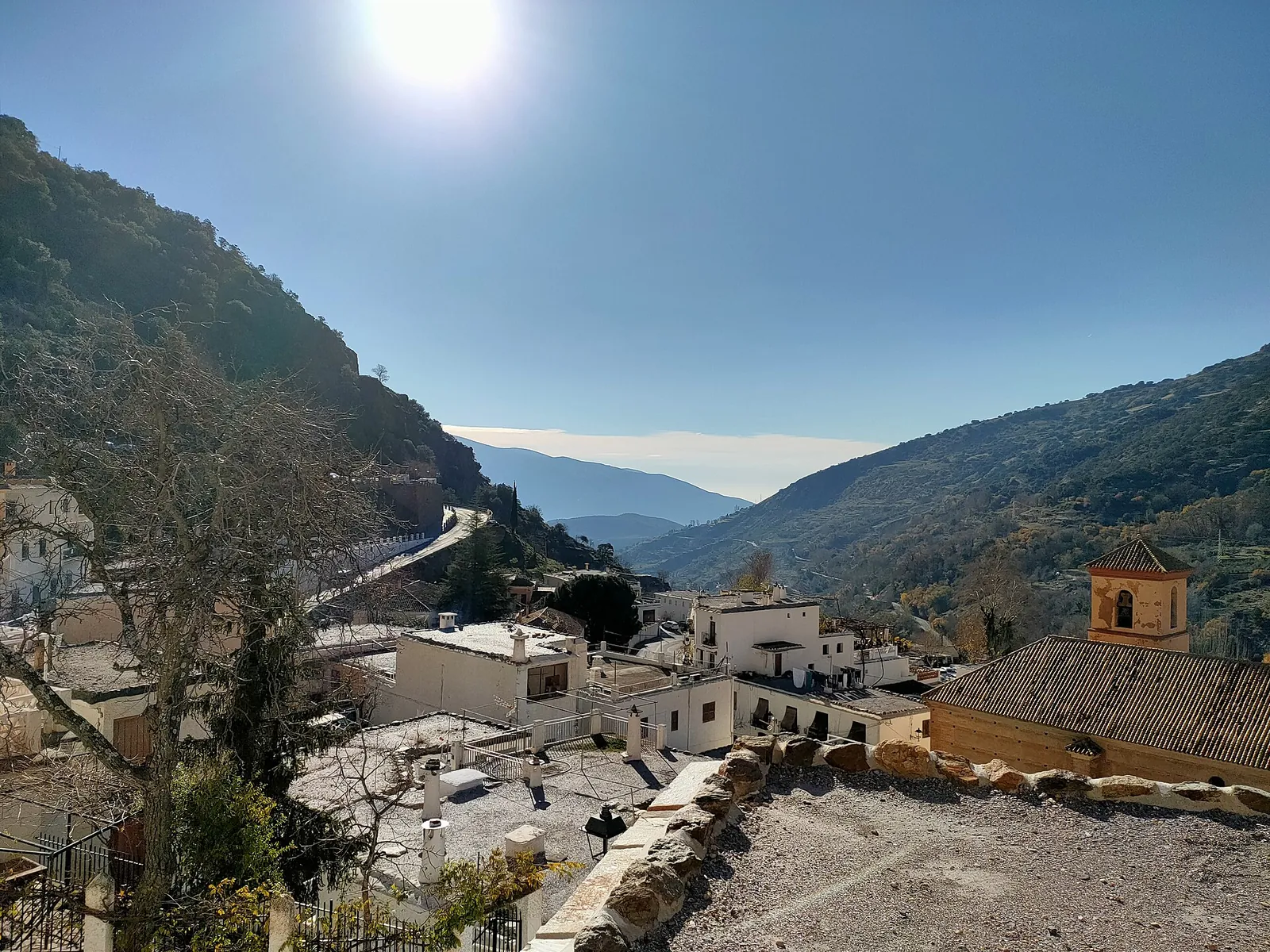
The villages were built in the style the Moors knew from the mountains of North Africa, with narrow, winding streets and small flat-roofed houses. Those flat roofs, the terraos, are the thing to look for. The houses step down the hill so that one family's roof becomes the next family's terrace, and the whitewash throws the lanes into sharp shade by mid-morning. Walk them early, before the light is high, and notice how the chimneys and the washing lines sit against the white like little details in a drawing.
Keep an ear out for the water too. The acequias run alongside many of the lanes, and on a quiet afternoon you can hear them long before you see them. It is a sound that tells you more about how these villages were kept alive than any board in a museum.
Trevélez and its ham
Trevélez sits at about 1,476 metres and is sometimes claimed to be the highest village in Spain. It is not the highest municipality, which is in Aragon, but the claim is part of the charm. What Trevélez does have is dry, thin mountain air, and that is what makes its air-cured hams possible. Serrano ham is cured in Trevélez and other high villages, so you will see whole legs hanging in the shop windows as you walk in.
Above a certain height, the mountain air does half the curing for you.
Buy a piece to take home, ask for a thin slice cut at the counter and eat it with bread and a glass of local wine before you think about the drive. Trevélez is a longer drive from the gorge villages than it looks on a map, so plan lunch there rather than squeezing it in.
Getting there from Motril and Salobreña
From Motril, allow the best part of an hour to reach Lanjarón on the A-348, and add a little more for the bends once the road leaves the valley. From Salobreña you will go through Motril first, so give yourself a few extra minutes. From Lanjarón the same road runs on to Órgiva, about 15 kilometres further. Turn off for the gorge there, and from Órgiva allow roughly 40 minutes to the three Poqueira villages on the mountain road.
Walkers come for the Poqueira loop, a route of roughly three hours that links all three villages along one side of the gorge and returns across the farmland on the other. The GR 240 long-distance path runs through Pampaneira, so you can join it from the village rather than driving to a trailhead. Bring a warm layer even in autumn, because the mountain weather changes faster than the forecast suggests.
A weekend plan
Leave Motril
Start early so that Lanjarón is quiet when you arrive and the drive up the valley is done before the heat of the day.
Lanjarón
Fill your bottles at the outskirts fountains, look at the baths, and walk up toward the castle ruin.
Órgiva
Lunch and the last shops before the mountain road.
Pampaneira and Bubión
Walk between the two villages in the late light, when the valley below turns gold and the houses go pale against the slope.
Stay in Capileira
The highest of the three has the most places to eat and sleep, and the best view of the gorge once the lights come on.
Sunday, the Poqueira loop
Do the three-hour loop in the morning while the air is still cool, then drive down to Trevélez for ham and lunch before heading back to the coast.
The Alpujarras are a clear way to see what the Granada hinterland is like away from the beaches, and they pair well with a day in the city of Granada. If you want to see the other side of the Sierra Nevada, the ski slopes in winter are a short drive from the Granada road, and our piece on skiing in the morning and swimming in the afternoon explains how that works. The city itself is covered in our guide to the Alhambra and the old quarters.
Sources
- Wikipedia — Alpujarra, accessed November 2026
- Wikipedia — Lanjarón, accessed November 2026
- Wikipedia — Pampaneira, accessed November 2026
- Wikipedia — Trevélez, accessed November 2026
- Wikimedia Commons — Capileira Vistas.jpg, accessed November 2026
- Wikimedia Commons — Pampaneira 01.jpg, accessed November 2026
- Wikimedia Commons — Shadowed valley seen along the GR 240 in Pampaneira, accessed November 2026
Keep reading
All storiesGranadaThe Lecrín Valley: orange blossom halfway to GranadaHalfway between the Costa Tropical and Granada, the Lecrín Valley has orange groves, white villages and a cable railway most people have forgotten. GranadaGuadix: living in a cave, an hour from GranadaThe Barrio de las Cuevas in Guadix: about two thousand cave houses, rooms that hold 18 to 20 °C, and the Geopark badlands nearby.
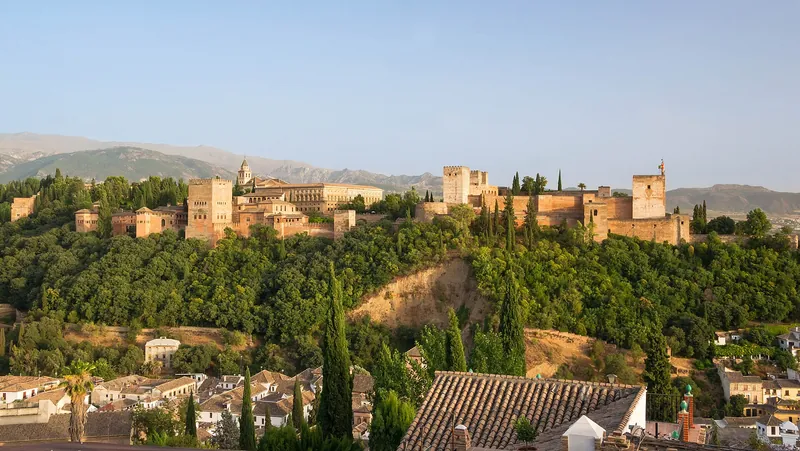 GranadaGranada from the coast: the Alhambra and a day in the cityThe A-44 gets you from the coast to Granada in about an hour, and the Alhambra needs booking ahead. How we plan a day in the city.
Ready when you are
Find your place on the Costa Tropical
Browse every home we have for sale, or tell House Hunter what you want and we will look for you.